We all encounter people in distress. Sometimes we are strong enough to deal with it. Sometimes we cannot handle it, and we walk away: professionally, because we think it is someone else, another director or line manager, who should deal with it, or because we assume Human Resources or People & Culture will own it; privately, because we judge that we are not close enough, or too close, to cope with it.
I have witnessed people in distress. Some of these encounters have had a lasting effect on me. They have shaken me, but they have also shaped who I am.
Every morning I switch the radio between VRT Radio 1 and France Inter. That is how I came to know Radio France’s star presenter, Nicolas Demorand. One day he revealed that he lives with bipolar disorder, and he published a memoir about it, “Intérieur Nuit”. The book explains, with great honesty, how hard this is, not only for him but also for those close to him.
As a relative, how do you read the signs, and when can you finally put a name to what you are seeing? Failing to see it clearly is something partners and family members often reproach themselves for afterwards: how could I have missed such a clear message, and not been there for this person in distress? The guilt that follows can be heavy to carry.
“Nous vivons souvent nos peines en silence, dans un coin de notre tête, au milieu de nos familles déstabilisées, de nos amis gênés, de nos collègues à qui nous n’en parlons pas. Une peine qui apparaît aussi en tombant par hasard sur une photo du temps où tout était plus simple.”
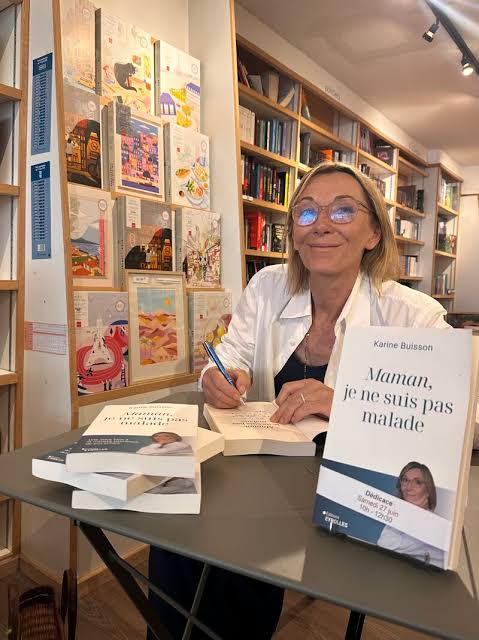
A podcast, “Si besoin”, now accompanies the book. Karine Buisson featured in one of its episodes. She speaks openly about what her son went through, and about the impact this had on her and the rest of the family. Where Demorand helped me better understand what it means to live with such a condition, Buisson opened my eyes to its impact on parents, partners, siblings, and others close to the person affected. Her book, “Maman, je ne suis pas malade”, is a sobering testimony.
“Tous ces échanges m’ont fait prendre la mesure du tabou immense et persistant autour de la santé mentale. Du silence qui isole, qui pèse. Un silence qui nous fait croire, à tort, que nous sommes seuls. À tort, puisque les troubles psychiques, dans toutes leurs diversités, touchent près d’un cinquième de la population, soit douze millions de Français.”
Perhaps it is time to break this taboo, and for the media to pay even more attention to the issue.
Karine Buisson, “Maman, je ne suis pas malade”, Éditions Eyrolles, Paris, 2026.
Nicolas Demorand, “Intérieur Nuit”, Les Arènes, Paris, 2025.


Plaats een reactie